Featured now
Active Park Design Programs
Current cycle
August–September 2026
Park Of The Month
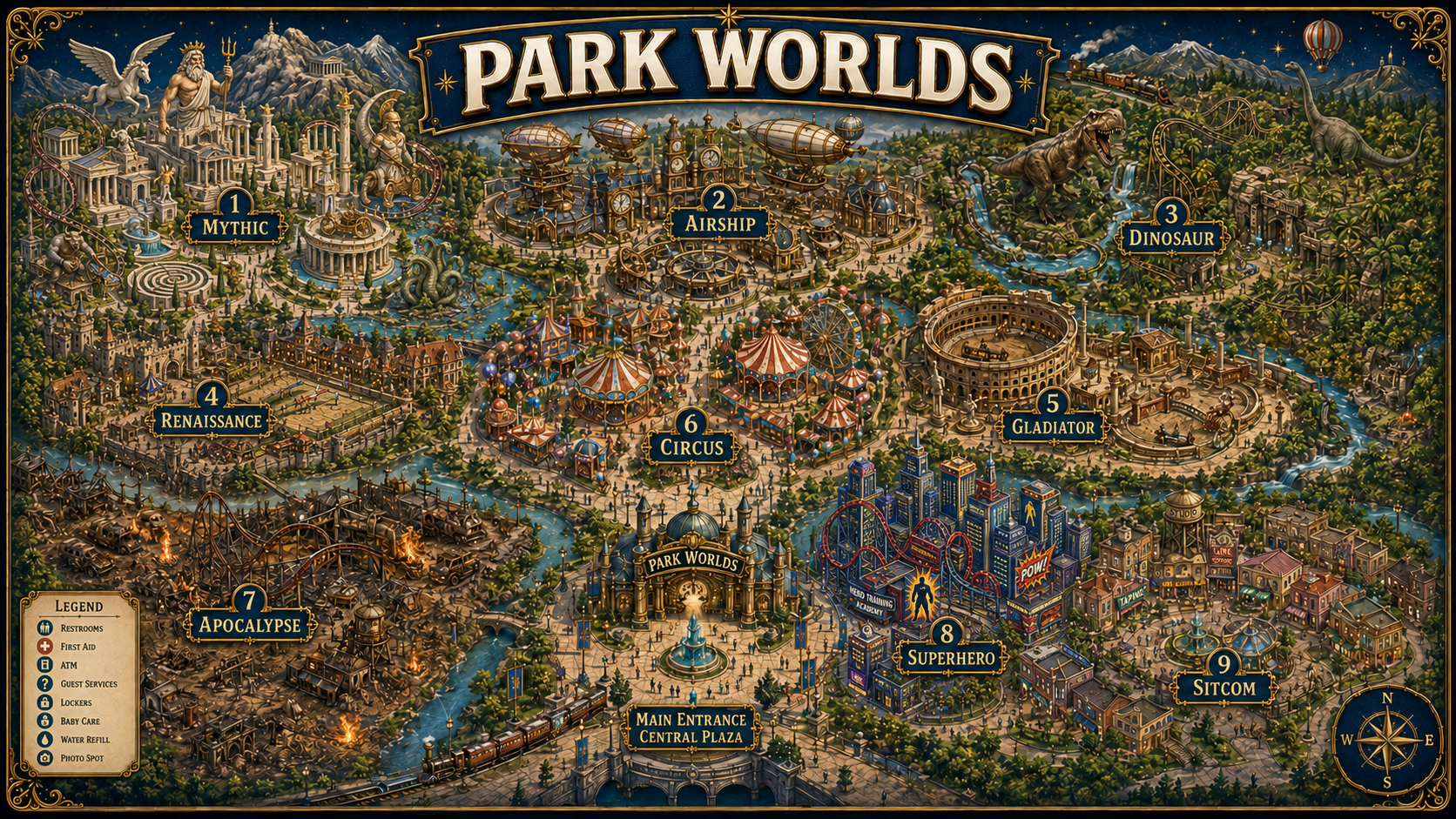
The current Park Of The Month is Imaginary Park #0001, a recurring Park Worlds program for developing a complete imaginary amusement park and its Land Themes.
Current cycle
September–November 2026
Seasonal Waterpark
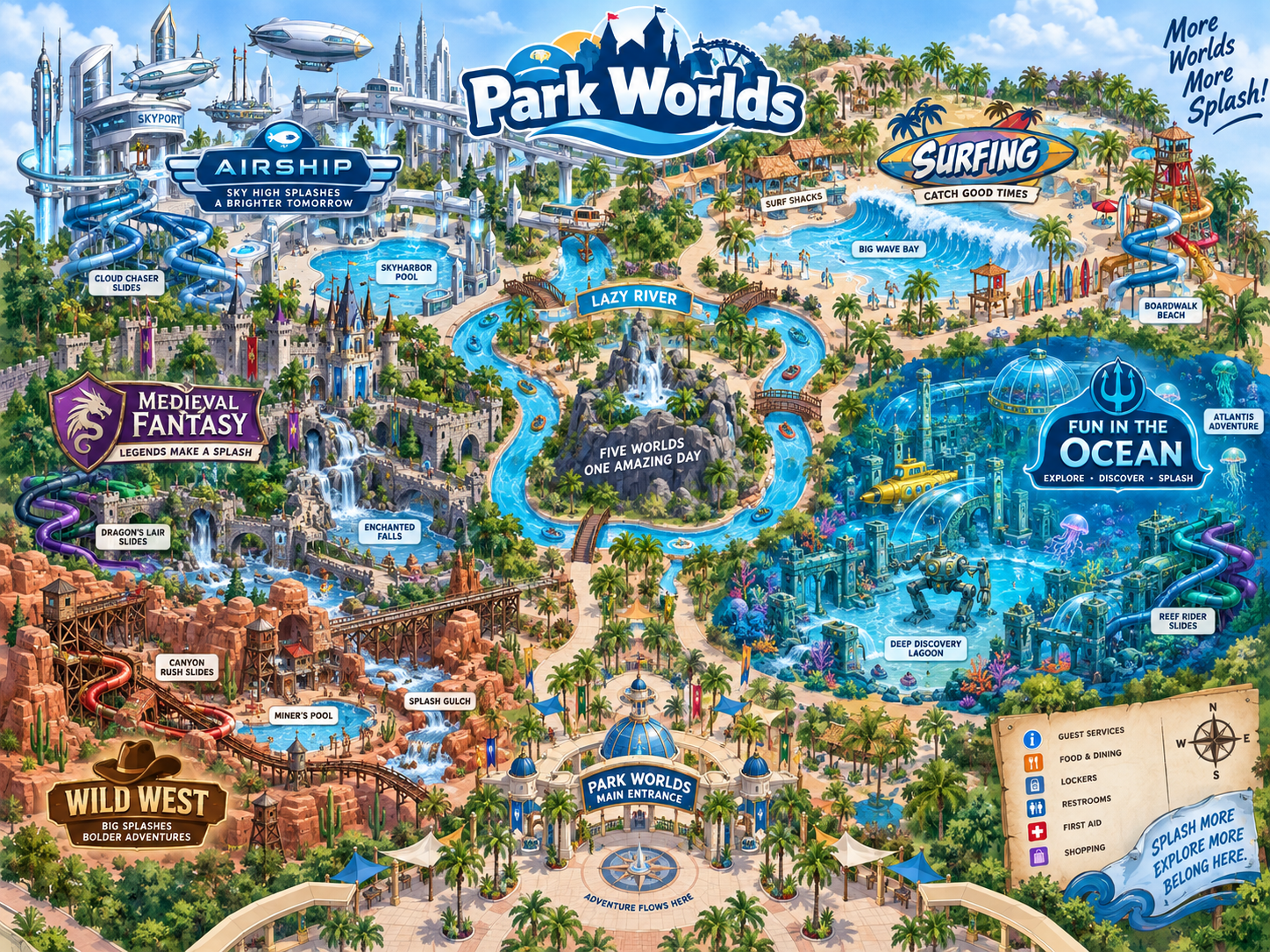
The current Seasonal Waterpark develops AIRSHIP, SURFING, FUN IN THE OCEAN, MEDIEVAL FANTASY, and WILD WEST as Waterpark Land Themes, including at least one lazy river.
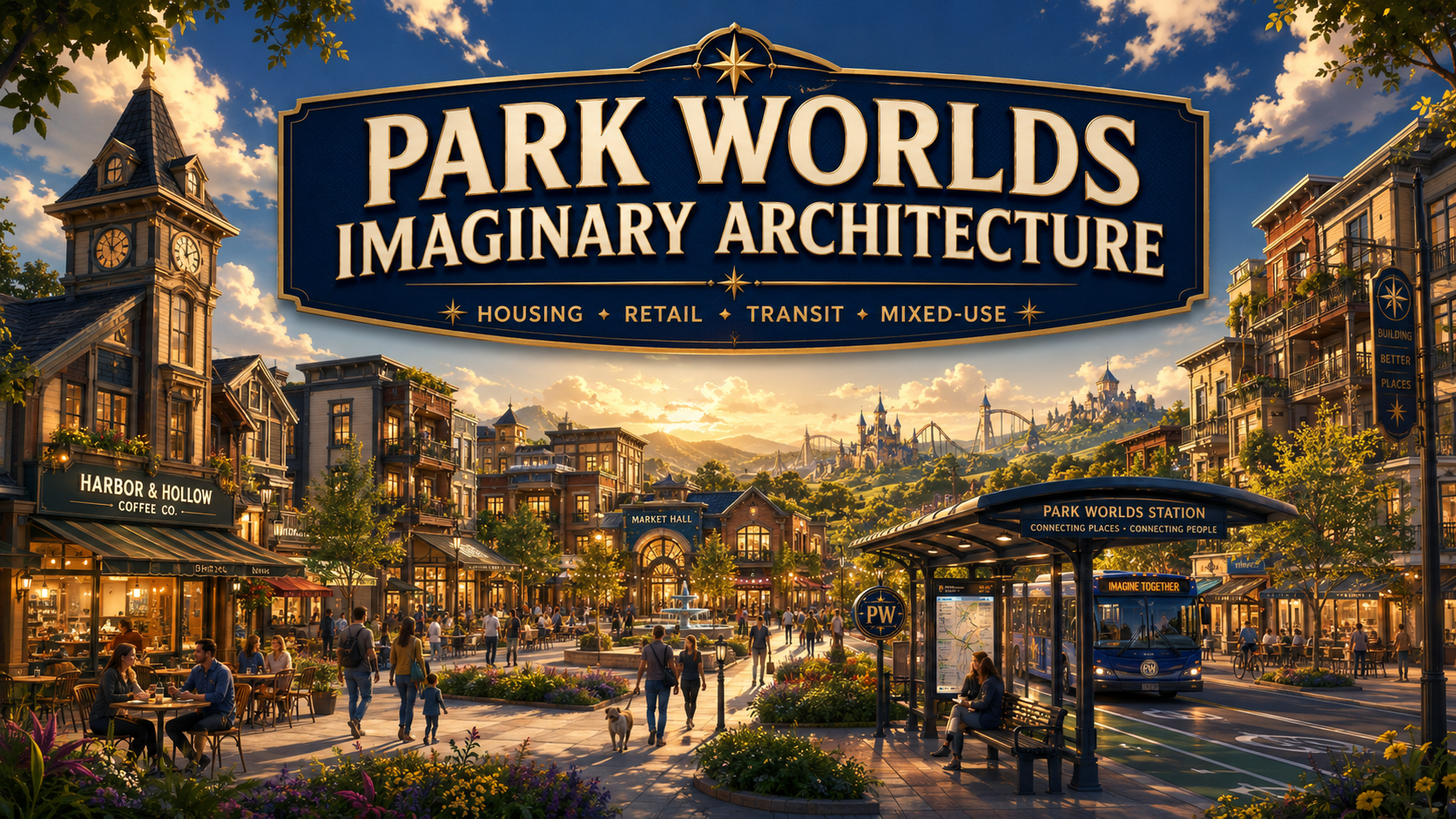
Park Worlds Imaginary Architecture develops original ideas for the built environment: places people might live in, shop in, travel through, work in, gather in, or visit. Housing, shopping centers, tiny-house villages, mixed-use developments, bus stops and transit structures, civic and commercial buildings, streetscapes, public spaces, and theme-park architecture can all be part of the same system.
A project does not have to fit only one use. Housing, retail, food, transit, community space, landscaping, and public space can share one footprint, and a whole development can be connected to the individual buildings, structures, spaces, and components that make it up.
From Developments to Components
Imaginary Architecture records can represent a whole development or site, a building, a structure, a space, or a smaller component. A tiny-house village, for example, can contain several house designs, a market, a cafe, a community pavilion, a bus stop, landscaping, signs, and other parts while remaining one larger imagined place.
Design-A-Thon → Code-A-Thon
The Park Worlds Imaginary Architecture Design-A-Thon develops the ideas: what a place or building is for, how it works, how it looks, how it fits its site, and the artwork or design material that communicates the concept.
The related Code-A-Thon takes suitable selected concepts and moves them into digital implementation, with the current goal of developing 3D assets suitable for use in Cities: Skylines II. The conceptual pipeline is idea → architectural design → concept artwork → selected or refined version → 3D modeling → textures and materials → game implementation → usable digital asset. Not every design has to become a game asset, and one larger development can eventually produce several assets.
Imaginary Architecture + Internet Strategies
Internet Strategies is part of how Imaginary Architecture gets made, not merely how finished work is promoted. The internet can recruit participants, preserve design decisions, connect concept designers with technical contributors, document progress, and help move an idea from a drawing or brief toward a working digital asset.
Website
ParkWorlds.com is the persistent source of truth: Architecture records, design briefs, artwork, Design-A-Thon and Code-A-Thon relationships, project progress, and eventual 3D-asset information can remain connected instead of disappearing into temporary messages or feeds.
YouTube Channel
YouTube can introduce design challenges, follow concept development, compare alternatives, show selected designs moving into 3D, explain the technical transition, and eventually show completed architecture operating inside Cities: Skylines II. The process itself becomes useful Park Worlds content.
Email supports specific outreach to architects, architecture students, planners, shopping-center and tiny-house designers, transit designers, 3D modelers, texture artists, Cities: Skylines creators, educators, and other relevant experts or content creators. A concrete project brief gives each outreach a specific reason to participate or respond.
Social Media
Social media can carry focused design questions, artwork reveals, calls for particular skills, work-in-progress images or clips, polls, and contributor spotlights while pointing back to the permanent Architecture record. Fast-moving conversation can therefore feed a durable project history.
Current participatory period
2026 Design-A-Thon + Code-A-Thon
These are two separate Park Worlds Event records running across the same August-December 2026 period. The Design-A-Thon develops architectural concepts and artwork; the Code-A-Thon develops suitable selected work toward usable 3D assets.
Design-A-Thon
2026 PW Imaginary Architecture Design-A-Thon
August-December 2026
The August-December 2026 Park Worlds Imaginary Architecture Design-A-Thon develops original concepts and artwork for housing, shopping centers, mixed-use developments, tiny-house villages, transit structures, public spaces, park architecture, and other imagined built environments.
Code-A-Thon
2026 PW Imaginary Architecture Code-A-Thon
August-December 2026
The August-December 2026 Park Worlds Imaginary Architecture Code-A-Thon takes suitable architectural concepts and artwork from the design workflow and develops them toward usable 3D assets for Cities: Skylines II.
Planned cadence
2027
The next cycle is planned as another paired Design-A-Thon and Code-A-Thon for the first half of 2027, building toward and culminating around the Park Worlds 2027 Convention, followed by another paired cycle for 2027 Second Half. Exact 2027 start and end dates remain intentionally undecided.
2027 First Half
PW Imaginary Architecture Design-A-Thon + PW Imaginary Architecture Code-A-Thon, culminating around the convention.
2027 Second Half
A new Design-A-Thon + Code-A-Thon pair for the second half of 2027.
Current project slate
Imaginary Architecture
Several Imaginary Architecture projects can run simultaneously. Public project records appear here with their active period when one has been defined.
Design Report
September–December 2026
Shopping Centers
September–December 2026 Park Worlds Design Report studying shopping-center types, tenant mixes, anchors, services, food and beverage, entertainment, circulation, access, parking, architecture, placemaking, and related design questions.